

The Palette Knife: Why I Swore Off Brushes to Sculpt My Art
Forget the soft, delicate paintbrushes you see in traditional art studios. In my workshop, art is not brushed onto the canvas—it is violently sculpted.
When I first transitioned from pouring paint to building deep, tactile surfaces, I realized traditional brushes were too weak for the stories I wanted to tell. They felt flat. I needed a tool that could handle weight, resistance, and raw force. That is the day I picked up the palette knife, and I have never looked back.
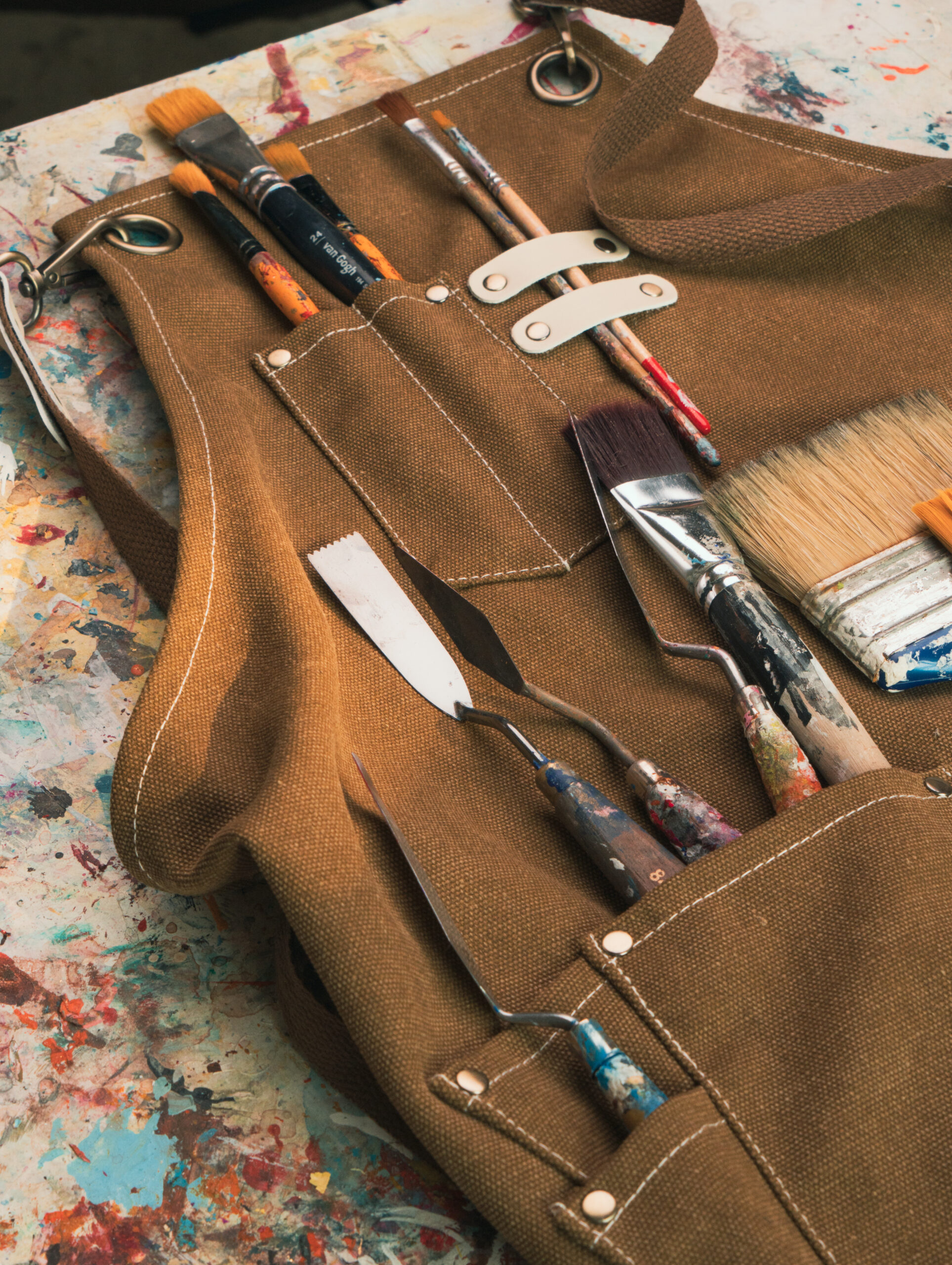
The palette knife is my primary weapon. It is a flexible steel blade that allows me to treat paint like wet clay or heavy cement.
Here is why this specific tool changed everything for my style:
- Building the Ridges: I use long, teardrop-shaped steel knives to scoop up massive chunks of acrylic mixed with sand. With one heavy swipe, I can create a thick, raised ridge that mimics the ancient rock formations of Gobustan.
- The Scraping Effect: I use short, flat-edged knives to aggressively scrape away wet layers of paint. This exposes the hidden colors buried underneath, creating a look of natural weathering and passing time.
- Razor-Sharp Lines: By using just the razor-thin edge of the blade, I can slice clean, geometric lines straight through the messy textures. It is the ultimate tool for balancing chaos and control.
When you look at a painting like Earth and Fire, you are looking at the direct physical imprint of steel meeting canvas. It takes hand strength, precision, and thousands of hours of practice, but the result is a textured landscape that a paintbrush could never create.
Leave a Reply